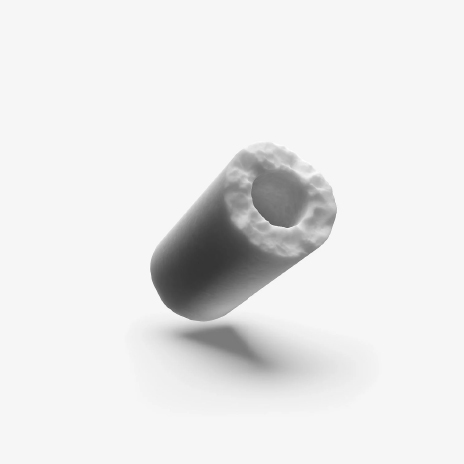
Molecular sieves are crystalline metal aluminosilicates with well-defined microporous structures that can selectively adsorb molecules based on size. These versatile materials are widely used in industrial applications for drying gases and liquids, removing impurities, and separating hydrocarbon streams. However, before they can perform their function effectively, molecular sieves must undergo a crucial preparation step known as activation.
This comprehensive guide explains what molecular sieve activation entails, why it is necessary, and the various methods used to activate these essential materials across different applications.
What Is Molecular Sieve Activation?
Activation is the process of removing adsorbed water and other contaminants from the molecular sieve’s pore structure to make the pores available for adsorption. Molecular sieves have an extremely high affinity for water and will readily adsorb moisture from the atmosphere during storage or after saturation during use. This adsorbed water blocks the pores and prevents the sieve from adsorbing target molecules.
The activation process essentially reverses this adsorption by applying heat and often a purge gas or vacuum to drive off the water and other volatile compounds, restoring the sieve’s adsorptive capacity.
Why Activation Is Essential
Fresh molecular sieves come from the manufacturer saturated with water from the manufacturing process. Used sieves become saturated with water and possibly other contaminants during service. Without proper activation, several problems occur.
The pores become blocked as water occupies the pore volume, preventing target molecules from accessing adsorption sites. Separation performance degrades, with retention times becoming unpredictable and separation efficiency declining. For sieve-based catalysts, active sites remain inaccessible, so catalytic activity suffers. The full adsorption capacity of the material cannot be utilized, meaning capacity is wasted.
In chromatography applications, a molecular sieve column will slowly lose separating power due to adsorption of moisture from samples or carrier gas and will eventually need to be conditioned again.
Activation Temperature Guidelines by Sieve Type
Different types of molecular sieves require different activation temperatures based on their pore size, chemical composition, and intended applications.
Type 3A molecular sieves are commonly used for dehydration of unsaturated hydrocarbons, drying polar liquids such as methanol and ethanol, and general-purpose drying. They are typically regenerated at temperatures between one hundred seventy-five and two hundred sixty degrees Celsius.
Type 4A molecular sieves find applications in static dehydration, water scavenging, and drying saturated hydrocarbon streams. Their regeneration temperature range is slightly higher at two hundred to three hundred fifteen degrees Celsius.
Type 5A molecular sieves are employed for separation of normal paraffins and removal of hydrogen sulfide and carbon dioxide from natural gas. They require regeneration temperatures of two hundred to three hundred fifteen degrees Celsius.
Type 13X molecular sieves are used for gas drying, air plant feed purification, and simultaneous water and carbon dioxide removal. They are typically regenerated at one hundred seventy-five to two hundred sixty degrees Celsius.
For 3A molecular sieves specifically, research confirms that the zeolite structure remains stable up to five hundred fifty degrees Celsius, with significant structural changes occurring only at higher temperatures. However, operating at the lower end of the recommended range is typically sufficient for water removal and more energy-efficient.
General Activation Methods
Laboratory-Scale Activation
For small quantities of molecular sieves used in laboratory settings, a simple thermal activation procedure is effective. Place a quantity of fresh molecular sieves from a sealed supply bottle into a fused-silica or ceramic crucible. Bake in a muffle furnace at three hundred fifty degrees Celsius for approximately two hours. Remove the hot crucible and place it immediately into a desiccator to cool. Use the activated sieves promptly to pack columns or for experiments, and store any leftovers in the desiccator to prevent re-adsorption of atmospheric moisture.
This method ensures that the sieves are fully activated and protected from moisture during cooling and storage.
In-Situ Column Activation for Chromatography
For gas chromatography applications, molecular sieve columns can be activated in place. Heat the column to approximately three hundred degrees Celsius and maintain this temperature for several hours. Keep dry carrier gas flowing continuously throughout the heating and cooling process. This drives off adsorbed water while the carrier gas sweeps away the desorbed moisture.
The in-situ approach is convenient because it activates the sieves exactly where they will be used, avoiding any exposure to air during transfer.
Industrial-Scale Activation
In large-scale industrial applications, molecular sieves are typically activated or regenerated using a combination of heat and purge gas. Thermal swing adsorption systems use hot gas, often nitrogen or dry process gas, passed through the sieve bed while heating. Temperatures typically range from two hundred to three hundred degrees Celsius depending on the sieve type and application. After heating, the bed is cooled with dry gas before being returned to service.
Industrial systems typically use multiple adsorber vessels so that some beds are adsorbing while others are being regenerated, ensuring continuous operation.
Specialized Activation Techniques
Vacuum Activation
For applications requiring extremely dry sieves or when handling air-sensitive materials, activation under vacuum is preferred. Place the molecular sieves in a suitable vessel that can withstand vacuum. Apply vacuum while heating. The vacuum lowers the boiling point of water and helps remove desorbed moisture. After activation, backfill with dry inert gas before cooling.
This method is particularly important for vacuum systems and foreline traps, where molecular sieves prevent oil back-streaming and trap water vapor.
Activation with Purge Gas Flow
The United States Department of Energy describes activation of molecular sieve adsorbents by flushing helium through the adsorbent while heating to remove adsorbed water and air. This approach offers several advantages. The flowing gas continuously removes desorbed water vapor. It prevents re-adsorption of moisture during cooling. It can be performed at atmospheric pressure. It is suitable for both laboratory and industrial scales.
Microwave Regeneration
Research has explored microwave energy as an alternative to conventional thermal regeneration. Microwave energy heats water rapidly and selectively within the sieve structure, potentially offering faster regeneration times, reduced energy consumption, more uniform heating, and potential for smaller bed sizes and lower capital costs.
Studies on Type 4A and 13X molecular sieves have demonstrated the technical feasibility of microwave regeneration, though this approach is less common in industrial practice than conventional thermal methods.
Activation for Catalyst Applications
When molecular sieves are used as catalysts or catalyst supports, such as those loaded with platinum group metals, activation may require additional considerations. Initial heating at lower temperatures below one hundred sixty degrees Celsius under pressure may be needed until water content is reduced to specified levels. Subsequent heating at higher temperatures in the presence of specific gases such as hydrogen may be required. Precise temperature control prevents damage to the active metal components. Pressure management ensures that the catalyst structure remains intact during activation.
Preventing Re-Activation Problems
Once molecular sieves are activated, they must be protected from atmospheric moisture. In laboratory settings, storage in a desiccator immediately after cooling is essential. In industrial applications, activated sieves should be transferred directly to the adsorber vessel or kept under a dry inert gas blanket.
The rate of moisture adsorption from air can be surprisingly fast. Activated sieves exposed to ambient air will begin adsorbing moisture immediately and can become partially deactivated within hours. Proper handling procedures are therefore critical to maintaining the benefits of activation.
Signs That Activation Is Needed
Several indicators suggest that molecular sieves require activation or regeneration. Reduced adsorption capacity is often the first sign, with the sieves failing to achieve the desired low moisture levels in the product stream. Increased pressure drop across the bed may indicate that adsorbed materials have changed the physical properties of the sieve particles. In chromatography applications, peak broadening, shifting retention times, or loss of resolution indicate that the column needs conditioning. Visible changes in the sieves themselves, such as darkening or caking, may suggest contamination that requires more aggressive regeneration.
Chempack’s Molecular Sieve Solutions
With over thirty years of experience in adsorbent technology, Chempack offers a comprehensive range of molecular sieves for diverse industrial applications. Our products include Type 3A, 4A, 5A, and 13X molecular sieves manufactured to strict quality standards. We provide detailed activation and regeneration guidelines specific to each product and application. Our technical team offers expert support for optimizing sieve performance, including assistance with activation procedures, troubleshooting, and system design. We also provide custom solutions for unique separation challenges, drawing on our deep understanding of adsorption technology and material science.
Conclusion
Activation is an essential step in the effective use of molecular sieves across laboratory and industrial applications. Whether through simple thermal treatment in a laboratory furnace, in-situ conditioning of a chromatography column, or sophisticated thermal swing adsorption in a large-scale plant, proper activation ensures that these remarkable materials can perform their function at maximum efficiency.
The key principles remain consistent regardless of scale. Heat drives off adsorbed water and contaminants. Purge gas or vacuum removes the desorbed materials. Protection from re-exposure to moisture maintains the activated state. By following these principles and the specific guidelines for each sieve type and application, users can ensure optimal performance and long service life from their molecular sieve products.
Chempack’s expertise in material technologies and engineering design supports customers across the refining, petrochemical, natural gas, and environmental industries in maximizing the value of their molecular sieve investments. For more information about our molecular sieve products and activation recommendations for your specific application, please contact our technical team.