In the industrial production of hydrogen, ammonia, and synthesis gas, the efficient conversion of carbon monoxide to carbon dioxide is a critical process step. This transformation is accomplished through the water-gas shift reaction, and at the heart of the first stage of this process lies the CO high temperature shift catalyst. Understanding its working principles is essential for optimizing performance in ammonia plants, hydrogen production units, and refineries.
This article delves into the fundamental mechanisms, active phases, and key components that enable this indispensable catalyst to function effectively.
The Foundation: The Water-Gas Shift Reaction
The water-gas shift reaction is a reversible, moderately exothermic chemical transformation where carbon monoxide reacts with water vapor to produce carbon dioxide and hydrogen. This reaction serves two primary purposes: it maximizes hydrogen yield and removes carbon monoxide, which is a poison for downstream catalysts such as those used in ammonia synthesis. Because the reaction is exothermic, lower temperatures favor a more complete conversion of carbon monoxide from a thermodynamic standpoint, while higher temperatures accelerate the reaction rate from a kinetic perspective.
To balance these opposing factors, industrial processes typically employ a two-stage system. The high temperature shift operates at approximately three hundred to four hundred fifty degrees Celsius to rapidly convert the bulk of the carbon monoxide. The low temperature shift follows, operating at approximately one hundred ninety to two hundred sixty degrees Celsius to achieve final, thorough carbon monoxide removal. The high temperature shift catalyst is specifically designed for the demanding conditions of the first stage.
Core Composition: The Iron-Chromium System
The traditional and most widely used high temperature shift catalyst is based on an iron-chromium system. However, its working form is not the oxide as manufactured, but a phase formed during activation or reaction.
Active Phase: Magnetite
The active component of the catalyst is magnetite. The catalyst is typically manufactured and loaded in the form of hematite. Before it becomes active, it must undergo a controlled reduction or activation step, where the hematite is converted to magnetite. This process must be carefully managed to prevent over-reduction to metallic iron, which can catalyze undesirable side reactions such as Fischer-Tropsch synthesis that produce unwanted hydrocarbons.
Structural Promoter: Chromium Oxide
While magnetite provides the active sites, pure magnetite would rapidly lose its surface area and activity under high-temperature operating conditions due to sintering, which is the growth of crystals at high temperatures. Chromium oxide is added as a structural promoter or stabilizer. It acts as a spacer between magnetite crystallites, physically preventing them from growing together and sintering. This stabilization maintains the catalyst’s high surface area over extended periods, ensuring long-term activity and mechanical strength. The optimal chromium content is typically maintained within a carefully controlled range.
Activity Promoter: Copper Oxide
Many modern high temperature shift catalyst formulations also include copper oxide as an activity promoter. The addition of copper provides several significant benefits. It lowers the reduction temperature required to activate the catalyst, making the start-up procedure more forgiving and reducing the risk of sintering during activation. It promotes the formation of the active magnetite phase. Most importantly, it creates highly efficient copper-iron oxide interfacial sites that dramatically enhance the intrinsic catalytic activity, allowing for higher carbon monoxide conversion at lower temperatures or increased throughput in existing reactors.
The Core Working Principle: The Redox Mechanism
For decades, the scientific community debated the precise mechanism by which the water-gas shift reaction occurs on these catalysts. The two main theories were an associative mechanism involving a surface formate intermediate and a regenerative redox mechanism. Through advanced in-situ characterization techniques, modern research has conclusively demonstrated that the reaction follows the redox mechanism.
In this mechanism, the catalyst itself participates directly in the reaction through a continuous cycle of oxidation and reduction. The process can be understood in two fundamental steps.
In the oxidation step, a water molecule from the gas phase adsorbs onto the catalyst surface and dissociates. The oxygen atom from the water molecule oxidizes the catalyst surface, becoming incorporated into the lattice structure. This step releases hydrogen gas, which desorbs and becomes part of the product stream.
In the reduction step, a carbon monoxide molecule from the gas phase adsorbs onto the now-oxidized catalyst surface. It extracts the oxygen atom that was deposited in the previous step, forming carbon dioxide which desorbs. This extraction reduces the catalyst surface back to its original state, ready to repeat the cycle with another water molecule.
The catalyst thus acts as an oxygen shuttle, with its active lattice oxygen being repeatedly removed by carbon monoxide and replenished by water. In copper-promoted iron-chromium catalysts, research has confirmed that under reaction conditions, the active sites are metallic copper nanoparticles supported on magnetite, with the copper-iron oxide interface serving as the primary catalytic center.
Catalyst Activation: The Critical First Step
Before a high temperature shift catalyst can perform its function, it must be properly activated. This activation typically occurs in the reactor under carefully controlled conditions. The as-loaded catalyst contains iron in the ferric state as hematite and copper as copper oxide. During activation, a controlled stream of process gas, often containing hydrogen and nitrogen, is introduced while temperature is gradually increased.
The reduction proceeds in stages. Copper oxide reduces first at relatively low temperatures, migrating to the magnetite surface. Hematite then reduces to magnetite, forming the final active structure. The steam-to-hydrogen ratio during this phase is critically important to prevent over-reduction to metallic iron, which would permanently damage catalyst performance.
Proper activation establishes the optimal copper-iron oxide interface and magnetite crystallite size. Rushing this process or using incorrect gas compositions can lead to poor activity, shortened catalyst life, or even catastrophic failure.
Deactivation Mechanisms and Catalyst Life
Despite its robust design, the high temperature shift catalyst eventually loses activity and requires replacement. Understanding deactivation mechanisms is essential for maximizing catalyst life.
Thermal Sintering
Prolonged exposure to high temperatures, especially during upsets or exotherms, causes both magnetite and copper crystallites to grow. This growth reduces the active surface area available for reaction. While chromium oxide significantly retards magnetite sintering, it cannot stop it entirely over years of operation.
Loss of Copper-Iron Oxide Interface
Research has revealed that under certain conditions, iron oxide species can migrate and encapsulate the active copper nanoparticles. This phenomenon buries the active copper-iron oxide interface beneath an inactive layer, eliminating the promotional benefit of copper even though the copper itself remains present. This mechanism explains why catalyst activity can decline even when bulk composition appears unchanged.
Poisoning
Certain impurities in the feed gas can permanently deactivate the catalyst. Sulfur compounds are particularly problematic, as they adsorb strongly on both copper and iron sites, blocking access to reactants. Chlorides can accelerate sintering and form volatile species that strip active components from the catalyst. Phosphorus and other contaminants can form low-melting compounds that destroy pore structure.
Mechanical Degradation
Physical stresses from thermal cycling, pressure drops, and bed movements can cause catalyst particles to break down into fines. These fines increase pressure drop across the reactor and can lead to channeling, where gas bypasses large portions of the catalyst bed, reducing overall conversion.
Industrial Significance and Process Integration
The high temperature shift catalyst occupies a critical position in the process flow of numerous industrial facilities. In a typical steam reforming-based hydrogen plant, reformed gas leaving the primary reformer contains substantial carbon monoxide at temperatures exceeding eight hundred degrees Celsius. This gas must be cooled before entering the high temperature shift reactor, where the bulk of the carbon monoxide is converted.
The heat released by the exothermic shift reaction is recovered to generate steam or preheat feed streams, contributing significantly to overall plant energy efficiency. The partially converted gas then proceeds to low temperature shift for final polishing before carbon dioxide removal and methanation.
In ammonia plants, the role of the high temperature shift catalyst is even more critical because any carbon monoxide escaping to the ammonia synthesis loop would permanently poison the iron-based ammonia synthesis catalyst. Proper high temperature shift performance is therefore essential not only for hydrogen production but for protecting the most valuable catalyst in the plant.
Modern Developments and Future Directions
While the basic iron-chromium formulation has served industry for nearly a century, ongoing research and development continues to improve high temperature shift catalyst technology.
Copper Optimization
Manufacturers continue to refine copper incorporation methods to maximize the stability and density of active copper-iron oxide interfacial sites. Advanced preparation techniques enable more uniform copper distribution and stronger resistance to the encapsulation phenomenon that deactivates conventional catalysts.
Chromium Alternatives
Environmental and health concerns regarding hexavalent chromium have motivated research into chromium-free high temperature shift catalysts. Alternative stabilizers including aluminum, magnesium, and rare earth oxides show promise, though matching the performance and cost-effectiveness of chromium remains challenging.
Shaped Catalyst Forms
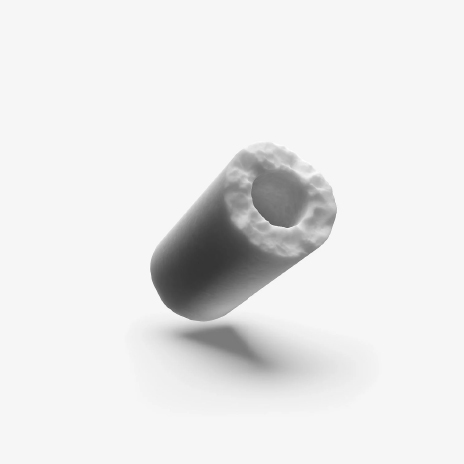
Modern manufacturing enables production of catalyst shapes optimized for specific reactor configurations. Ring-shaped, lobed extrudates, and other non-cylindrical forms reduce pressure drop while maintaining geometric surface area, improving energy efficiency and allowing higher throughput in existing vessels.
Graded Bed Systems
Sophisticated reactor designs now employ graded beds where multiple catalyst formulations are arranged to optimize overall performance. Guard layers with higher contaminant tolerance protect the main catalyst charge, while progressively more active formulations in downstream positions ensure complete conversion.
Chempack’s Expertise in Shift Catalysts
With over three decades of experience in catalyst technology, Chempack offers high-performance high temperature shift catalysts based on advanced iron-chromium-copper formulations. Our products feature precisely controlled active phase development through proprietary manufacturing techniques, optimized copper promotion that creates stable, highly active copper-iron oxide interfacial sites, robust mechanical properties ensuring long-term structural integrity, and consistent quality from batch to batch through rigorous quality control.
Our technical team provides comprehensive support including activation procedure development, performance monitoring, troubleshooting assistance, and custom formulation for specific feedstock and operating conditions.
Conclusion
The CO high temperature shift catalyst operates through an elegantly simple yet fundamentally sophisticated mechanism. Its core principle involves a dynamic redox cycle where the catalyst shuttles oxygen between water and carbon monoxide, producing hydrogen and carbon dioxide while itself remaining unchanged. This cycle is enabled by the complex interplay between magnetite as the primary active phase, chromium oxide as a structural stabilizer, and in modern formulations, copper as an activity promoter that creates highly efficient interfacial active sites.
Proper activation establishes the optimal structure, while understanding deactivation mechanisms enables operators to maximize catalyst life through careful process control. As hydrogen assumes increasing importance in the global energy transition, the high temperature shift catalyst will remain an essential technology for efficient, reliable hydrogen production.
Chempack remains committed to advancing this technology and supporting our customers with high-quality products and deep technical expertise. For more information about our high temperature shift catalyst solutions, please contact our technical team.