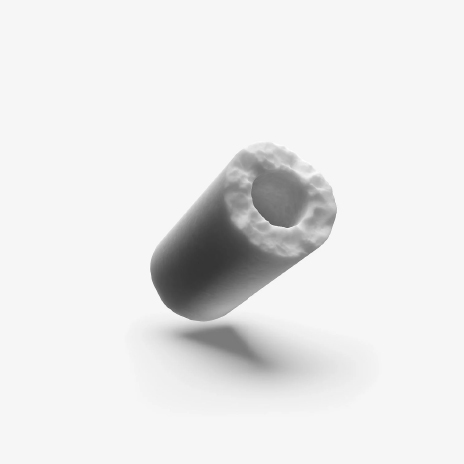
Activated alumina has emerged as one of the most critical materials in modern water treatment, offering exceptional adsorption capabilities for removing harmful contaminants from drinking water and industrial wastewater. As global concerns over water quality intensify and regulations become increasingly stringent, the role of activated alumina in purification systems continues to expand. This comprehensive analysis explores the current applications, market dynamics, technological advancements, and future outlook for activated alumina in the water treatment industry.
Understanding Activated Alumina: Properties and Mechanisms
Activated alumina is a highly porous form of aluminum oxide (Al₂O₃) manufactured through thermal dehydration of aluminum hydroxide, resulting in a material with an exceptionally high surface-area-to-weight ratio . This unique honeycomb-like structure, combined with its chemical stability and mechanical strength, makes it an ideal adsorbent for water treatment applications.
The material’s effectiveness stems from its ability to selectively remove contaminants through adsorption mechanisms including electrostatic attraction, ion exchange, and surface complexation. Activated alumina typically exhibits surface areas ranging from 200 to 300 square meters per gram, with the most effective varieties for water treatment having surface areas of approximately 300 square meters per gram and positively charged surfaces with pH point of zero charge around 9 . These characteristics enable efficient capture of anionic contaminants such as fluoride and arsenic species.
Primary Water Treatment Applications
Fluoride Removal: The Dominant Application
Fluoride removal represents the single largest application for activated alumina in water treatment. The World Health Organization estimates that over 200 million people worldwide are exposed to unsafe levels of fluoride in drinking water, creating substantial demand for effective purification solutions . Excessive fluoride consumption causes dental and skeletal fluorosis, debilitating conditions that affect communities primarily in developing regions.
Activated alumina’s affinity for fluoride ions makes it exceptionally well-suited for defluoridation applications. Research demonstrates that high-quality activated alumina samples can achieve approximately 90 percent fluoride removal efficiency under optimal conditions . The adsorption mechanism involves ion exchange where fluoride ions replace hydroxyl groups on the alumina surface, followed by surface complexation forming aluminum-fluoride bonds.
Municipal water treatment plants account for over 35 percent of activated alumina consumption globally, with the fluoride adsorbent segment driving much of this demand . Countries with widespread fluoride contamination, including India, China, and parts of Africa, have increasingly adopted activated alumina-based systems in response to government initiatives and WHO guidelines.
Arsenic Remediation
Arsenic contamination in groundwater affects millions of people across South Asia, Southeast Asia, and parts of Latin America, presenting severe health risks including cancer and cardiovascular disease. Activated alumina demonstrates significant efficacy for arsenic removal, particularly for arsenate species (arsenic in its +5 oxidation state).
Research indicates that properly formulated activated alumina can achieve 57 to 72 percent arsenic removal efficiency . Enhanced formulations, such as iron-impregnated activated alumina, offer even greater performance. Products like ACTIGUARD® AAFS50, an iron-enhanced activated alumina, demonstrate two to three times higher arsenic capacity compared to non-promoted activated alumina, with 25 to 30 percent increased uptake capacity over conventional materials .
The versatility of activated alumina extends to simultaneous removal of multiple contaminants. Iron-enhanced varieties effectively remove both arsenic and fluoride in non-regenerating systems while also proving effective for zinc, copper, lead, selenium, phosphate, and nitrate removal across numerous industrial applications . This multi-contaminant capability provides significant operational advantages for water treatment facilities facing complex water quality challenges.
Industrial Wastewater Treatment
Beyond drinking water applications, activated alumina plays an increasingly important role in industrial wastewater treatment. Manufacturing facilities, mining operations, and chemical plants generate wastewater containing heavy metals and other toxic contaminants that require removal before discharge or reuse.
Activated alumina’s effectiveness for removing selenium, phosphate, and heavy metals makes it valuable for industrial applications . The material’s chemical stability and resistance to harsh conditions allow it to perform effectively in challenging industrial wastewater matrices where other adsorbents might degrade or lose capacity.
Groundwater remediation projects represent another growing application area. Contaminated industrial sites require effective treatment technologies to restore groundwater quality, and activated alumina has proven effective in site cleanups where metals and nutrients are concerns .
Market Dynamics and Growth Drivers
Market Size and Projections
The global activated alumina market demonstrates steady growth driven primarily by water treatment applications. Market size reached approximately USD 1.1 billion in 2024, with projections indicating continued expansion to between USD 1.12 billion and USD 1.7 billion by 2030-2032, representing compound annual growth rates ranging from 3.8 percent to 5.7 percent depending on regional and segment-specific factors .
The water treatment end-user segment dominates the market, accounting for approximately 33 to 35 percent of total consumption . Within this segment, fluoride adsorbent applications lead, followed by arsenic removal due to rising health concerns .
Regional Market Analysis
Asia Pacific stands as the dominant regional market, contributing approximately 41.6 percent of global consumption . This leadership position reflects rapid industrialization, urbanization, and severe groundwater contamination challenges across the region. China and India drive demand through government-led water purification programs, particularly in fluoride-affected rural areas. India’s Jal Jeevan Mission, which aims to provide safe drinking water to all rural households, exemplifies the type of large-scale initiatives creating sustained demand .
China’s prominence stems from its massive chemical and refinery sectors alongside widespread water quality challenges. The country’s investments in water infrastructure and tightening environmental standards continue to drive adoption of activated alumina-based treatment technologies .
North America holds significant market share driven by stringent environmental regulations, particularly EPA guidelines on water safety . The United States leads consumption, with activated alumina widely used for fluoride and arsenic removal in municipal drinking water systems. Investments in upgrading aging water infrastructure further support market growth.
Europe’s market is characterized by rigorous environmental policies under the EU’s Water Framework Directive and REACH regulations, which mandate efficient adsorbent use for industrial and municipal wastewater treatment . Countries including Germany and France are prominent consumers due to their advanced chemical processing and pharmaceutical industries.
Regulatory Drivers
Stringent regulations governing water quality represent perhaps the most powerful driver of activated alumina adoption. The European Union’s updated Drinking Water Directive, while not mandating specific technologies, establishes parametric values and risk management frameworks that position activated alumina as a widely referenced best-available technology for fluoride and arsenic adsorption .
In the United States, EPA guidelines on maximum contaminant levels for arsenic and fluoride drive municipal and industrial adoption. Similar regulatory frameworks across developed and developing nations create compliance-driven demand that sustains market growth.
Technological Innovations and Product Developments
Enhanced Formulations
Manufacturers continue to innovate, developing enhanced activated alumina formulations with superior performance characteristics. Iron-impregnated products offering two to three times higher arsenic capacity than conventional materials demonstrate the potential for targeted contaminant removal . These specialized formulations command premium pricing while addressing specific water quality challenges.
Recent developments in material science have enhanced adsorption capacity by 15 to 20 percent compared to conventional products through improved pore structure engineering . BASF’s investments in sustainable alumina production technologies and introduction of advanced product variants by manufacturers including Honeywell UOP illustrate the industry’s focus on performance enhancement .
Nanotechnology Integration
The integration of nanotechnology in production processes has enabled creation of activated alumina with higher surface areas and improved adsorption kinetics. Nano-structured alumina offers enhanced adsorption capacities and selectivity, potentially revolutionizing contaminant removal processes . While still emerging, these advanced materials demonstrate the technology’s versatility and potential for future applications.
Product Form Optimization
Activated alumina is available in multiple forms optimized for different applications. Spherical beads, which currently dominate the market with approximately 57.5 percent share, offer advantages for continuous flow applications including industrial columns and fixed-bed systems . Their high mechanical strength enables regeneration and reuse, making them cost-effective for large-scale operations.
Powdered forms, with particle sizes typically below 50 microns, provide faster adsorption kinetics and approximately 20 percent higher surface area, making them ideal for batch processes and applications requiring rapid treatment . The above-300-mesh segment leads the powder market due to its high surface area and adsorption efficiency .
Competitive Landscape
Key Industry Players
The activated alumina market features a mix of multinational chemical corporations and regional specialists. BASF SE, Honeywell UOP, and Axens collectively account for significant market share, leveraging vertically integrated operations, patent-protected manufacturing processes, and established distribution networks .
Sumitomo Chemical has emerged as a formidable competitor in Asia-Pacific, leveraging Japan’s advanced materials science capabilities. Porocel Industries (Evonik) and CHALCO maintain strong positions through capacity expansion and strategic geographic positioning . Regional players including Shandong Boyang New Materials, Jiangsu Jingjing New Material, and Sorbead India compete effectively in their home markets through competitive pricing and localized supply chains .
Strategic Developments
Industry consolidation accelerated in early 2024 when BASF acquired a controlling stake in Shandong Boyang New Materials, strengthening its fluoride removal media portfolio for Asian markets . Such strategic moves reflect the importance of geographic expansion and product portfolio diversification.
Specialty chemical producers increasingly differentiate through sustainability initiatives. Huber’s recent launch of a fully recyclable alumina desiccant demonstrates how environmental considerations are reshaping competitive strategies . Manufacturers investing in research and development of tailored solutions for niche applications can establish strong positions in high-value market segments.
Challenges and Limitations
Competition from Alternative Technologies
Activated alumina faces increasing competition from alternative adsorbents including ion exchange resins, activated carbon, silica gel, and zeolites. These substitutes often promise comparable performance at lower costs or with easier regeneration cycles, particularly in specific applications . The continuous improvement in polymeric adsorbents, which offer higher selectivity for certain contaminants, poses particular challenges.
Alternative adsorbents currently hold approximately 30 percent market share in relevant segments, compelling activated alumina producers to innovate and demonstrate clear cost-benefit advantages . Price-sensitive markets, where capital expenditures require careful justification, present particular challenges for market penetration.
Performance Limitations
While activated alumina demonstrates excellent performance across many applications, limitations emerge under extreme pH conditions or when processing complex contaminant mixtures. Efficiency decreases significantly in highly acidic or alkaline environments, often requiring supplementary treatment steps . These performance constraints necessitate ongoing research and development investments.
Susceptibility to fouling and clogging, particularly in feed streams containing organic matter or oil residues, can increase operational costs. Performance variability in multi-component systems where competitive adsorption occurs presents additional challenges requiring careful system design.
Production Costs and Supply Chain Issues
The production of activated alumina involves significant costs, estimated at approximately USD 1,200 per ton, primarily due to energy-intensive calcination processes . Manufacturing one ton typically requires over 2,500 kWh of energy, making energy costs a critical profitability factor .
Raw material price volatility compounds these challenges. Aluminum prices fluctuated by over 20 percent annually between 2020 and 2024, creating margin pressure for manufacturers . Geopolitical factors affecting bauxite supply chains and energy-intensive production processes further exacerbate cost uncertainties.
Recent global supply chain volatility has impacted the market, with logistics bottlenecks causing delivery delays and inventory imbalances. The material’s hygroscopic nature requires specialized packaging and transportation conditions, increasing logistics costs particularly for international shipments .
Future Outlook and Opportunities
Emerging Applications
The electronics industry presents significant growth potential for high-purity activated alumina. The material’s electrical insulation properties and thermal conductivity make it valuable for semiconductor manufacturing and electronic component production . With the global semiconductor market expected to reach USD 1 trillion by 2030, demand for ultra-pure grades with precisely controlled particle size distributions is poised to increase substantially.
Pharmaceutical applications represent another high-value growth segment. Activated alumina is increasingly used for drug purification, moisture control in packaging, and as a catalyst support in active pharmaceutical ingredient production . Medical-grade activated alumina, particularly above-300-mesh sizes, demonstrates superior performance in chromatography and as inert carriers for medical compounds, with this segment projected to grow at 6.8 percent CAGR through 2032 .
Sustainability and Circular Economy
The global shift toward sustainability creates significant opportunities for activated alumina manufacturers. The material’s regenerability enables multiple reuse cycles without significant capacity loss, making it cost-effective and environmentally friendly compared to single-use adsorbents .
Modified formulations that enable circular economy approaches, such as repeated regeneration cycles, are gaining commercial traction . As industries redesign processes around circularity principles, activated alumina’s ability to enable water and solvent recovery while reducing material waste positions it favorably compared to alternatives.
Emerging Market Expansion
Developing regions present substantial growth opportunities as industrialization accelerates and water infrastructure investments increase. Asia-Pacific’s market is projected to grow at 4.2 percent CAGR through 2032, with China, India, and Southeast Asia leading demand . Africa’s growing water quality challenges and infrastructure development initiatives create new market potential.
Middle Eastern markets, facing severe water scarcity, are increasingly adopting advanced water treatment technologies including activated alumina-based systems. Latin America presents growth pockets driven by governmental initiatives to improve water quality and industrial processes .
Technological Advancements
Innovations in production techniques, including energy-efficient methods and advanced process control, can significantly lower costs and improve product quality. Manufacturers investing in research and development of enhanced formulations with superior adsorption kinetics and regeneration capabilities can establish strong positions in high-value market segments.
The development of specialized surface treatments that enhance biocompatibility opens new applications in pharmaceutical and medical fields. Customized formulations targeting specific contaminant challenges in municipal and industrial applications create differentiation opportunities in increasingly competitive markets.
Conclusion
Activated alumina occupies a vital position in the global water treatment landscape, offering effective, cost-efficient solutions for fluoride and arsenic removal alongside growing applications in industrial wastewater treatment and groundwater remediation. The material’s exceptional adsorption properties, regenerability, and versatility ensure its continued relevance as water quality challenges intensify worldwide.
Market growth through 2030 will be driven by regulatory pressures, infrastructure investments, and technological advancements that enhance performance and expand application scope. Asia Pacific will maintain its dominant position while emerging markets present the fastest growth opportunities. Manufacturers investing in innovation, sustainability, and strategic geographic expansion will be best positioned to capture value in this dynamic market.
As Chempack, with over thirty years of experience in adsorbent technology and material sciences, we remain committed to advancing activated alumina applications in water treatment and supporting our customers’ purification needs with high-quality products and technical expertise.