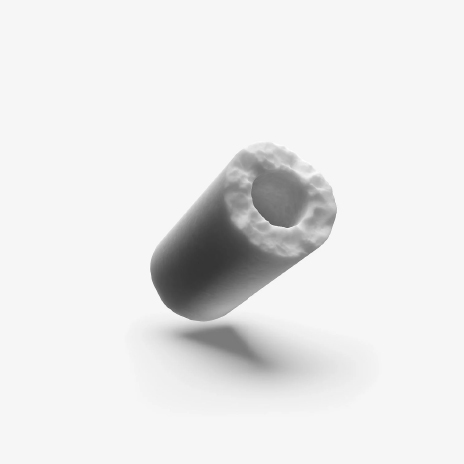
The global molecular sieve market is poised for significant expansion over the 2026 to 2030 forecast period, driven by increasing demand from key industrial sectors, technological advancements, and the global transition toward cleaner energy and sustainable processing. As crystalline metal aluminosilicates with precisely engineered microporous structures, molecular sieves play an indispensable role in selective adsorption, gas separation, catalysis, and purification across a wide range of industries.
Market Size and Growth Projections
The global molecular sieves market is expected to reach a value of approximately USD 4.5 billion in 2025, with projections indicating continued robust growth through the forecast period. According to comprehensive market analysis, the market is forecast to grow by USD 2.4 billion during 2026 to 2030, accelerating at a compound annual growth rate of 8.0 percent. Other research sources project slightly varying figures, with some estimating the market will reach USD 5.34 billion by 2030, representing a CAGR of 6.68 percent from 2025 to 2030, while others forecast a more conservative growth rate of 3.74 percent through 2034, reaching USD 6.3 billion. These variations reflect different market definitions and segmentation approaches, but all point toward sustained positive momentum.
Key Market Drivers
Expanding Oil and Gas and Petrochemical Industries
The expansion of the oil and gas and petrochemical industries remains one of the most influential factors driving molecular sieve market growth. Molecular sieves are indispensable in a wide range of refining, gas processing, and petrochemical applications due to their unique structural properties, high selectivity, and stability under extreme conditions. As global demand for natural gas continues to rise, driven by its reputation as a cleaner-burning fossil fuel, the need for advanced gas purification technologies has become more critical.
Molecular sieves are widely used for dehydration of natural gas to prevent hydrate formation during transportation, removal of impurities such as carbon dioxide and hydrogen sulfide, and sweetening of sour gas to meet safety and environmental standards. In petrochemical applications, they are essential for drying and purifying various hydrocarbon streams and gases, with their high selectivity and separation efficiency based on molecular size making them key to ensuring final product purity.
In India, for example, the petrochemical sector is expected to attract over USD 87 billion in investment over the next decade, accounting for more than ten percent of global petrochemical industry growth. The government’s long-term vision for the sector targets total investment of approximately USD 142 billion by 2025, driving substantial demand for molecular sieves in refining and processing applications.
Rising Adoption in Water Treatment Applications
Another major factor driving market growth is the extensive application of molecular sieves in water treatment technologies. As global demand for clean and safe water continues to grow, molecular sieves are increasingly becoming a preferred solution for water purification and decontamination. Known for their high adsorption capacity and selectivity based on molecular size, they demonstrate excellent utility in various industrial and municipal water treatment applications.
The global water supply and demand gap is projected to reach forty percent by 2030, creating urgent need for efficient water management solutions. Sustainable water management practices and various water quality standards are significantly increasing demand for molecular sieves in water treatment plants. This is true not only in developed regions but also in developing countries facing water scarcity and environmental pollution challenges.
Molecular sieves are particularly effective for ammonium ion removal, heavy metal adsorption including lead, cadmium, and arsenic, and removal of oil, grease, and organic contaminants. Their ability to selectively adsorb pollutants while maintaining high throughput makes them a preferred material in both primary and tertiary treatment systems.
Growing Emphasis on Sustainability and Clean Technologies
The global shift toward sustainability and environmentally friendly practices is a powerful catalyst for molecular sieve market growth. These advanced materials are becoming increasingly integral to gas purification and separation processes including removal of carbon dioxide and hydrogen sulfide from natural gas and industrial gas streams, emission control technologies across automotive and stationary industrial systems where sieves function as selective adsorbents and catalyst supports, and hydrogen production and storage, particularly in green hydrogen applications where purity and efficiency are critical.
Molecular sieves play important roles in numerous environmentally friendly processes, including carbon capture and green chemistry applications. By selectively adsorbing gases and organic compounds, they help reduce emissions and improve energy efficiency in various industrial processes, aligning with increasing regulatory pressure and corporate environmental sustainability initiatives. For instance, Honeywell’s Ecofining technology, which relies on advanced molecular sieve systems, enables production of sustainable aviation fuel and renewable fuels while significantly reducing carbon dioxide emissions.
The emergence of new, high-performance, environmentally friendly molecular sieves is also driving market growth. This trend is particularly evident in the automotive and renewable energy sectors, where molecular sieves are used to reduce pollution in fuel evaporation control systems and support renewable energy storage and purification processes.
Regional Market Analysis
Asia Pacific: The Dominant Market
Asia Pacific currently dominates the global molecular sieves market with approximately 33.4 percent market share. This leadership position is driven by rapid industrialization, growing petrochemical and water treatment sectors, and increasing demand for efficient purification solutions across the region. Countries including China, India, Japan, South Korea, and Indonesia represent substantial markets with diverse application requirements.
China’s massive industrial base and continued investment in refining and chemical processing make it a key consumer of molecular sieves. India’s expanding petrochemical sector and growing emphasis on water treatment infrastructure create substantial opportunities. The region’s manufacturing strength and export capabilities also support its dominant market position.
Europe: The Fastest-Growing Region
Europe is positioned to emerge as the fastest-growing regional market in the global molecular sieve landscape, driven by a combination of regulatory, technological, and industrial factors accelerating adoption across multiple end-use sectors. The European Union’s aggressive sustainability agenda, anchored by the European Green Deal and Fit for 55 package, is fueling demand for advanced materials that support emission reduction, waste minimization, and cleaner production processes.
European regulations are accelerating market penetration and creating compliance-driven competitive advantages for molecular sieve-based solutions. The region’s strong push toward a circular economy model, especially in water reuse and resource recovery, is translating into rising demand for sieves in municipal and industrial wastewater treatment. Countries including Germany, France, the United Kingdom, Italy, and Spain represent substantial markets with sophisticated technical requirements.
North America: Innovation and Production Leadership
North America plays a pivotal role in the molecular sieves market, driven by advanced industrial infrastructure and significant focus on innovation. As a leading producer and consumer, the United States supports market growth through extensive applications in petrochemicals, natural gas processing, and air separation technologies.
Investments in research and development enhance the efficiency and performance of molecular sieves, catering to stringent environmental regulations and energy optimization demands. For example, Honeywell’s adsorption-based technology for major LNG projects enables water, carbon dioxide, and hydrocarbon removal, supporting large-scale production and enhancing global energy accessibility. The region’s strong manufacturing base and export capabilities ensure steady supply of high-quality molecular sieves to global markets.
Key Market Trends
Shift Toward Circular Economy and Sustainable Manufacturing
A major emerging trend influencing the molecular sieve market is the integration of circular economy principles across industries. Businesses and governments are increasingly emphasizing resource efficiency, waste minimization, and closed-loop systems, prompting demand for materials that support sustainable operations.
Molecular sieves enable water and solvent recovery, allowing industries to reuse processed materials and reduce discharge. They play a key role in nutrient recovery from wastewater, such as capturing ammonia or phosphates for use in fertilizers. Spent sieves can be regenerated or repurposed, reducing material waste and aligning with zero-waste goals. As industries redesign processes around circularity, molecular sieves are increasingly viewed as enabling materials.
Emergence of Specialty and Application-Specific Formulations
Another key trend shaping the market is the growing demand for highly specialized, application-specific molecular sieve formulations. Unlike traditional one-size-fits-all grades, companies and research institutions are developing custom-engineered sieves designed for advanced pharmaceutical applications including drug delivery and controlled release, targeted gas separation such as carbon dioxide capture from flue gas or hydrogen purification, and selective catalysis in niche chemical reactions.
This shift reflects a broader move toward precision materials, where performance is fine-tuned for maximum efficiency, selectivity, and lifecycle benefits. Advanced fabrication techniques including nano-structuring, ion-exchange modification, and functional surface coatings are making it possible to design sieves for specific molecules, operating conditions, or industrial goals. This trend positions molecular sieves not just as general-purpose materials but as high-tech components in next-generation industrial systems.
Technological Advancements in Sieve Materials
Molecular sieve technology continues to advance, with improvements in efficiency, selectivity, and durability driving expanded applications. Enhanced fabrication methods enable better control of pore size distribution, mechanical strength, and regeneration properties. These advancements make sieves more effective in challenging environments and open new application possibilities.
In pressure swing adsorption systems, for example, improved sieve materials enable better cycle times, pressure ranges, and feed variability handling. The integration of digital monitoring and optimization tools allows for system-level performance enhancement, balancing purity, recovery, energy consumption, and maintenance intervals.
Market Challenges
High Production and Processing Costs
One of the most significant barriers to molecular sieve market growth is the relatively high cost of production, particularly for synthetic zeolites. Key cost drivers include energy-intensive manufacturing processes especially during calcination and activation stages, high-grade raw materials such as alumina, silica, and alkaline earth metals, and the need for precise temperature and pressure control to maintain pore structure and selectivity.
For specialized applications in pharmaceuticals, petrochemicals, and gas separation, manufacturers are often required to produce custom-engineered structures, which further increases complexity and cost. This makes it difficult for smaller manufacturers or cost-sensitive industries to adopt molecular sieves at scale. Additionally, price volatility in raw materials and energy markets can adversely impact profit margins and deter new investment in capacity expansion.
Competition from Alternative Technologies
Molecular sieves face competition from alternative sorbents and catalysts, many of which are lower in cost or more readily available. Competing materials include activated carbon, widely used for organic compound adsorption in water and air purification; silica gels and alumina, used in drying and gas separation applications; polymeric membranes, increasingly adopted in gas processing and water treatment for their selectivity and scalability; and liquid-phase ion exchange resins, favored in water softening and heavy metal removal.
While molecular sieves offer advantages including thermal stability, regenerability, and molecular precision, in many applications these alternatives offer comparable performance at lower costs or with simpler implementation. As new materials and hybrid technologies emerge, especially those involving nanomaterials, biomaterials, and smart membranes, manufacturers must invest in innovation and differentiation to maintain market relevance.
Technical Limitations
Molecular sieves face technical constraints that limit deployment in certain high-complexity environments. Key challenges include ineffectiveness against large organic contaminants that exceed pore dimensions, susceptibility to fouling and clogging particularly in feed streams containing oil residues or biological matter, performance variability in mixed gas or multi-component liquid systems where uniform separation becomes more difficult, and material degradation in extreme pH conditions, which shortens lifecycle performance and raises replacement frequency.
These limitations may result in increased system downtime, additional pre-treatment requirements, and higher operational costs, diminishing economic feasibility in some industrial settings. Retrofitting sieve-based solutions into legacy infrastructure can involve capital-intensive modifications, specialized training, and temporary operational disruptions, factors that may deter adoption among cost-sensitive or risk-averse operators.
Competitive Landscape
The global molecular sieves market features a competitive landscape with numerous established players and emerging specialists. Key vendors operating in the market include Arkema Group, Axens Group, BASF SE, Brownell Limited, CarboTech AC GmbH, Clariant, FUJIFILM Holdings Corporation, HengYe Incorporated, Honeywell International Incorporated, KURARAY Company Limited, Merck KGaA, Sorbchem India Private Limited, Tosoh Corporation, W. R. Grace and Company, and Zeochem AG.
These companies compete on multiple dimensions including product quality and consistency, technical expertise and application support, manufacturing scale and cost efficiency, innovation and new product development, and geographic reach and distribution networks. The market also includes numerous regional and specialized players serving niche applications or local markets.
Future Outlook and Opportunities
The molecular sieve market presents substantial opportunities for growth and innovation through 2030 and beyond. Key opportunity areas include expansion in emerging economies where industrialization and infrastructure development drive demand for refining, petrochemical, and water treatment applications, integration with energy transition technologies including green hydrogen production, carbon capture, and renewable fuel processing, advancement in pharmaceutical and biotechnology applications requiring high-purity separation and controlled release systems, development of novel sieve materials with enhanced properties including improved selectivity, durability, and regeneration efficiency, and circular economy solutions emphasizing sieve regeneration, recycling, and sustainable manufacturing practices.
The increasing adoption of molecular sieves in high-purity and specialty applications represents a prime growth driver. Growing integration in energy transition and clean fuel technologies, coupled with technological advancements in customized and application-specific sieves, will lead to sizable demand in the market through the forecast period.
Conclusion
The global molecular sieve market from 2026 to 2030 is characterized by sustained growth driven by fundamental industrial demand, environmental imperatives, and technological innovation. With projected growth rates ranging from approximately four to eight percent annually depending on market segment and region, the market offers substantial opportunities for established players and new entrants alike.
Asia Pacific maintains its dominant position while Europe emerges as the fastest-growing region, reflecting different market drivers and industrial priorities. The oil and gas and petrochemical sectors remain primary consumers, but water treatment, sustainable technologies, and specialty applications represent rapidly expanding segments.
As industries worldwide face increasing pressure to optimize processes, reduce environmental impact, and transition toward cleaner operations, molecular sieves will play an increasingly vital role as enabling materials for next-generation industrial efficiency and sustainability. Companies that invest in innovation, application-specific solutions, and strong customer partnerships will be best positioned to capture value in this dynamic and evolving market.